
If you go to Athens today you will find a cave-like structure with a placard advertising that this was the jail in which Socrates died. The consensus is out about the exact location, but unlike modern societies, the Athenians were not equipped to house criminals en masse and not for long periods of time. A group of baton-wielding slaves called the Eleven were a police-like force that brought suspects in and guarded over prisoners. Instead of lengthy prison stays, persons were either kicked out of the city and forbade from returning upon further penalties or were executed in short order.
Category: Book Projects
Remembering Plato (Pt. 2): Recollection in the Meno
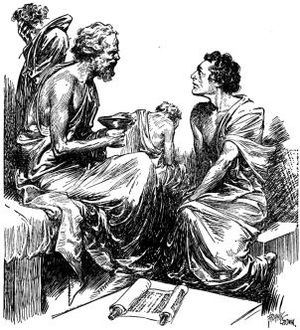
Introduction to the Meno The Meno belongs to the middle period of Plato’s dialogs and it is here that we first encounter an extended treatment of Plato’s theory of reminiscence [recollection] (anamnesis). We define reminiscence as the recollection or remembering of the past. Plato, however, has a specific meaning of anamnesis - the first philosophical … Continue reading Remembering Plato (Pt. 2): Recollection in the Meno
Remembering Plato (Pt.1)
Memory Processes in the Platonic Dialogs 1. Introduction Plato’s Words Plato’s is the best attested voice from the ancient world. There are 35 dialogs and 13 letters attributed to him, some of whose authorship is contested by both ancient and modern scholars. Yet, all the written works known to be produced by Plato in the … Continue reading Remembering Plato (Pt.1)
 Nathen Murawski