
If you go to Athens today you will find a cave-like structure with a placard advertising that this was the jail in which Socrates died. The consensus is out about the exact location, but unlike modern societies, the Athenians were not equipped to house criminals en masse and not for long periods of time. A group of baton-wielding slaves called the Eleven were a police-like force that brought suspects in and guarded over prisoners. Instead of lengthy prison stays, persons were either kicked out of the city and forbade from returning upon further penalties or were executed in short order.
Blog
List of Academic Publications
16. Stanton ME, Murawski NJ, Jablonski SA, Robinson-Drummer, Heroux NA (2021). Mechanisms of context conditioning in the developing rat. Neurobiology of Learning and Memory, 179, 107388. https://doi.org/10.1016/j.nlm.2021.107388. 15. Pittenger ST, Chou S, Murawski NJ, Barrett ST, Loh O, Duque JF, Li M, & Bevins RA. (2021). Female rats display higher methamphetamine-primed reinstatement and c-Fos immunoreactivity … Continue reading List of Academic Publications
Persistent Psychological Symptoms and the Brain in COVID-19
What are the various psychological effects of COVID-19 infection? How does the coronavirus produce such effects? And what can we learn about coronaviruses and brain function in general? To better understand the true impact of COVID-19, it is vital that we examine the acute and long-term effects that infection has on mental health. In this essay, I describe the various acute and long-term psychological, psychiatric, and neurological symptoms associated with COVID-19, outline neuroanatomical findings in infected patients that may underlie these symptoms, and discuss what we can learn about psychological disorders through the lens of COVID-19.
Remembering Plato (Pt. 2): Recollection in the Meno
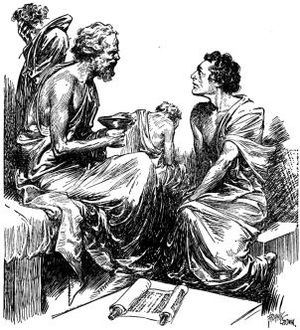
Introduction to the Meno The Meno belongs to the middle period of Plato’s dialogs and it is here that we first encounter an extended treatment of Plato’s theory of reminiscence [recollection] (anamnesis). We define reminiscence as the recollection or remembering of the past. Plato, however, has a specific meaning of anamnesis - the first philosophical … Continue reading Remembering Plato (Pt. 2): Recollection in the Meno
Remembering Plato (Pt.1)
Memory Processes in the Platonic Dialogs 1. Introduction Plato’s Words Plato’s is the best attested voice from the ancient world. There are 35 dialogs and 13 letters attributed to him, some of whose authorship is contested by both ancient and modern scholars. Yet, all the written works known to be produced by Plato in the … Continue reading Remembering Plato (Pt.1)
Welcome to My Blog
My goal with this blog is to regularly post (~once a week) ongoing projects. Once these writing projects are complete, they will then be posted under a different section.
Therapeutic Targeting of Nicotinic Acetylcholine Receptors in a Rat Model of FASD
NIH K99 Application (Non-funded, 2014) Specific Aims. Fetal alcohol spectrum disorders (FASD) include a wide-range of abnormal neuroanatomical, neurochemical, and neurobehavioral outcomes resulting from the teratogenic effects of alcohol on the developing embryo or fetus [1]. One of the key aims of FASD research is the development of successful treatments to improve cognition in affected … Continue reading Therapeutic Targeting of Nicotinic Acetylcholine Receptors in a Rat Model of FASD
The role of corticotropin releasing factor in the enhancement of conditioned fear in alcohol-dependent rats.
Research Proposal (non-funded; 2015) Background and Significance. Corticotropin releasing factor (CRF) may play a critical role in the motivational effects of continued alcohol abuse [1]. While CRF has been intensively studied for its function in stress and anxiety within the HPA axis, it its function in key limbic areas position this peptide to regulate affective … Continue reading The role of corticotropin releasing factor in the enhancement of conditioned fear in alcohol-dependent rats.
Optogenetic Strategies to Mitigate Aberrant Fear Conditioning in Alcohol-Withdrawn Mice
Below you will find the Research Strategy for an NIH K01 application submitted 2017 and 2018. Neither submission was funded. The experiments described under Aim 1 were published in Hippocampus [(2021) Jan;31(1):3-10. doi: 10.1002/hipo.23263. Epub 2020 Sep 18]. RESEARCH STRATEGY BACKGROUND AND SIGNIFICANCE Withdrawal from drugs of abuse directly impacts the brain’s stress and memory … Continue reading Optogenetic Strategies to Mitigate Aberrant Fear Conditioning in Alcohol-Withdrawn Mice
First blog post

This is the excerpt for your very first post.
 Nathen Murawski